

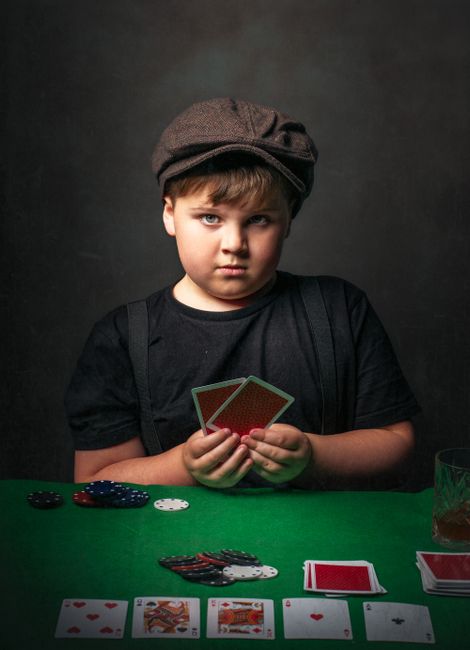
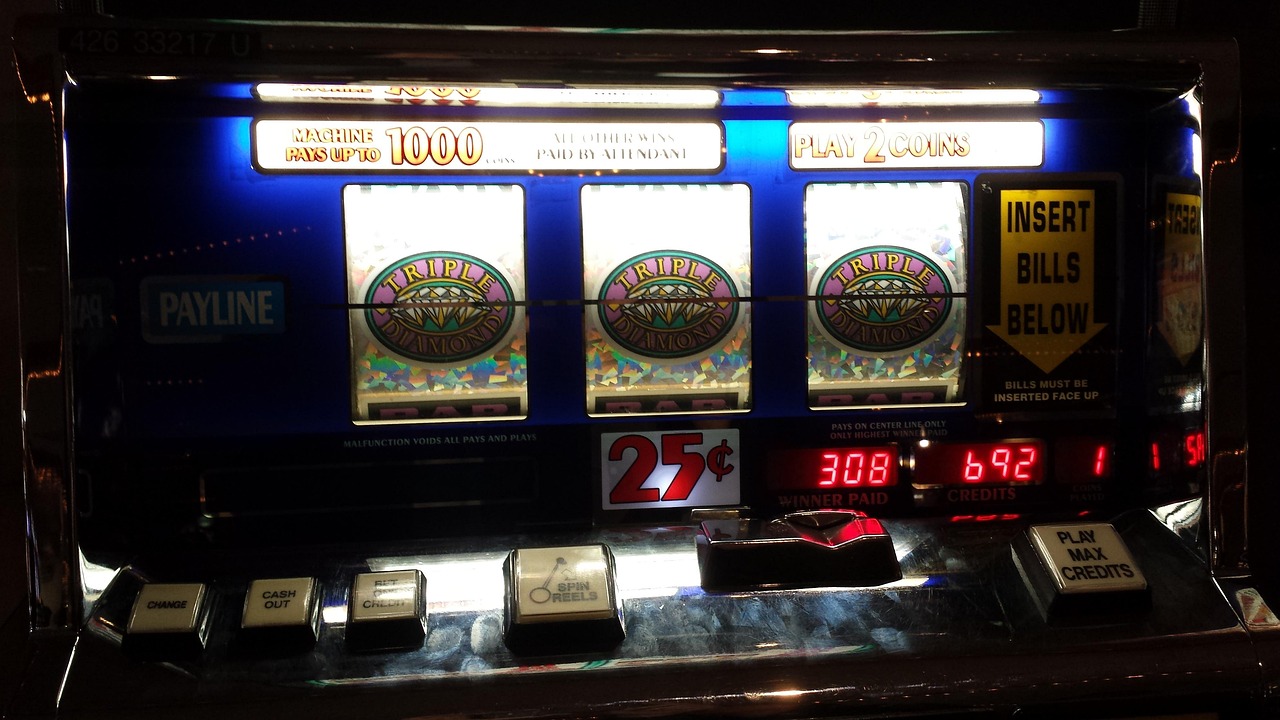
You sit down at a glowing slot machine, press a button, and three seconds later you know if you won or lost. Now picture a poker table: you stare at your opponent, calculate pot odds, and wait 45 seconds before acting on a single hand. Both are gambling. Both live under the iGaming umbrella. But treating them as the same beast is the fastest way to lose money — or worse, lose your love for the game.
I've spent years watching casual players bounce between slots and poker without understanding how the underlying math, psychology, and skill curves actually work. The result? Frustration. They blame bad luck on a slot machine that was never designed to reward patience, or they try to bluff a poker table full of nits who only play aces. Let's break down what separates these two pillars of iGaming — plus a quick look at where sports betting and live dealer games fit into the picture.
The Math You Cannot Ignore: House Edge vs. Player Skill
Here's the single most important distinction: slots are a negative expectation game with zero skill. Poker is a negative-sum game before rake, but a positive expectation game if you're better than your opponents.
What does that mean in practice? A typical video slot returns between 94% and 97% of all money wagered over millions of spins. That 3% to 6% house edge is baked into the random number generator (RNG). No hot streak, no button-pressing rhythm, no “lucky machine” will change that. You spin 1,000 times at $1 per spin, and you can expect to lose $30 to $60. Guaranteed by probability, not by fate.
Poker flips that. In a cash game, the house takes a small rake (usually 5% up to $3 or $4 per pot). After the rake, the table is a closed ecosystem: winners take money from losers. If you're the 8th best player at a 9-handed table, you lose. If you're the 2nd best, you win consistently. The game rewards decision quality over time. A detailed guide is available at L'Avenue Dubai.
- Crucial stat: A skilled poker player might win 5 to 10 big blinds per 100 hands at low stakes. A slot player with perfect strategy still loses 3% of every dollar cycled through the machine.
- Time horizon: Slots give immediate, independent results. Poker requires 10,000+ hands to realize your true win rate.
- Variance is brutal in both, but for different reasons: Slots have jackpot-driven variance; poker has cooler-driven variance (set over set, etc.).
Why Slots Feel Like They're “Due” (And Why They Aren't)
Walk into any casino and you'll see it: a player camped on a machine that just paid out a $200 bonus, convinced the next spin is another winner because “it's hot.” Or the opposite — someone avoiding a machine that hasn't hit in an hour because “it's cold.” Both are wrong.
Each spin on a modern slot is an independent event. The RNG cycles thousands of times per second. The reels you see are a visual representation, not a mechanical truth. A game with a 96% RTP and a 50,000x max win might have a hit frequency of 1 in 4 spins. That means 75% of your spins lose, often for 20 or 30 spins in a row. That's not a broken machine. That's normal variance.
Here's a concrete example. Say you're playing a 5-reel, 20-payline slot with an RTP of 96.2%. Your average loss per spin is 3.8 cents per dollar. Over 500 spins at $1, your expected loss is $19. But the standard deviation is huge — you could easily be up $80 or down $200 after those 500 spins. The math only evens out after hundreds of thousands of spins. You will never play that long.
Takeaway: Treat slots as entertainment, not investment. Set a loss limit before you spin and stick to it. If you want a game where you can beat the house, you're in the wrong section of the casino.
Poker: The Only Game Where You Can Actually Win Long-Term
Poker is not a casino game in the traditional sense. It's a people game played with cards. The house provides the table, the dealer, and the rake — that's it. Your edge comes from exploiting opponents' mistakes: calling too much, bluffing too little, playing too many hands, folding too often to river bets.
Consider a simple spot. You hold A♠K♠ on a flop of Q♠7♠2♦. You have two overcards and a flush draw. Your opponent bets half the pot. A weak player calls because “I have ace-high.” A strong player calculates: they have roughly 45% equity against a pair of queens, and the pot odds are 3:1. That's a clear call — actually a raise in many cases. Same cards, different decision quality.
Over 100,000 hands, that single decision repeats thousands of times. The player who understands equity, position, and range advantage wins. The player who plays by feel loses. That's why online poker rooms track “win rate” and “all-in EV” — numbers that slot players never see because skill has no place in their game.
Three concrete poker edges you can build today
- Position: Play fewer hands from early position. Fold A♣J♦ under the gun in a full-ring game. It's a trap hand.
- Bet sizing: Use smaller bets on dry boards (K♠7♦2♥) and larger bets on wet boards (9♥8♥6♣).
- Player notes: Label opponents as “calling station” or “nit” within five hands. Exploit them relentlessly.
Sports Betting and Live Casino: The Hybrid Middle Ground
If slots and poker are the two poles, sports betting sits somewhere in between. You can't change the outcome of a game, but you can shop lines, identify value, and use models. A sharp bettor might find a +105 underdog that should be +120 based on true probability. That 15-cent edge is real, repeatable, and taxable.
Live dealer games — blackjack, baccarat, roulette — add a human element to the RNG formula. But here's the truth: live blackjack with a 0.5% house edge (perfect basic strategy) is far better than any slot. Live roulette with a single zero (2.7% edge) still beats slots by a mile. Yet most players flock to the shiny slots because they offer the dream of a 10,000x payout. That dream has a price.
A Simple Rule for Your Next iGaming Session
Before you deposit a single dollar, ask yourself one question: Do I want to be entertained or do I want to compete?
- Entertained? Play slots, live dealer games, or sports betting with small stakes. Set a timer. Expect to lose. Enjoy the ride.
- Compete? Play poker. Study ranges. Review hand histories. Accept that you'll lose for weeks before you win for months. That's the path.
Mixing the two without understanding the difference is how you end up broke and bitter. I've seen it a hundred times. The slot player who tries poker and gets crushed because they can't fold top pair. The poker player who tilts away $500 on a bonus buy slot because they “deserve” a win after a bad beat. Both are playing the wrong game with the wrong mindset.
Final Thought: Respect the RNG, Respect the Players
iGaming is not one thing. It's a spectrum from pure chance to pure skill, with a hundred shades of grey in between. Slots are a roller coaster — thrilling, safe if you follow the rules, and completely out of your control. Poker is a chess match with money on the line — brutal, beautiful, and ruthlessly fair to those who put in the work.
You don't have to pick one forever. But you do have to know which one you're playing at any given moment. Otherwise, the house — or a better player — will eat you alive. And that's not bad luck. That's just the math.
Related posts
More stories you’ll love reading