




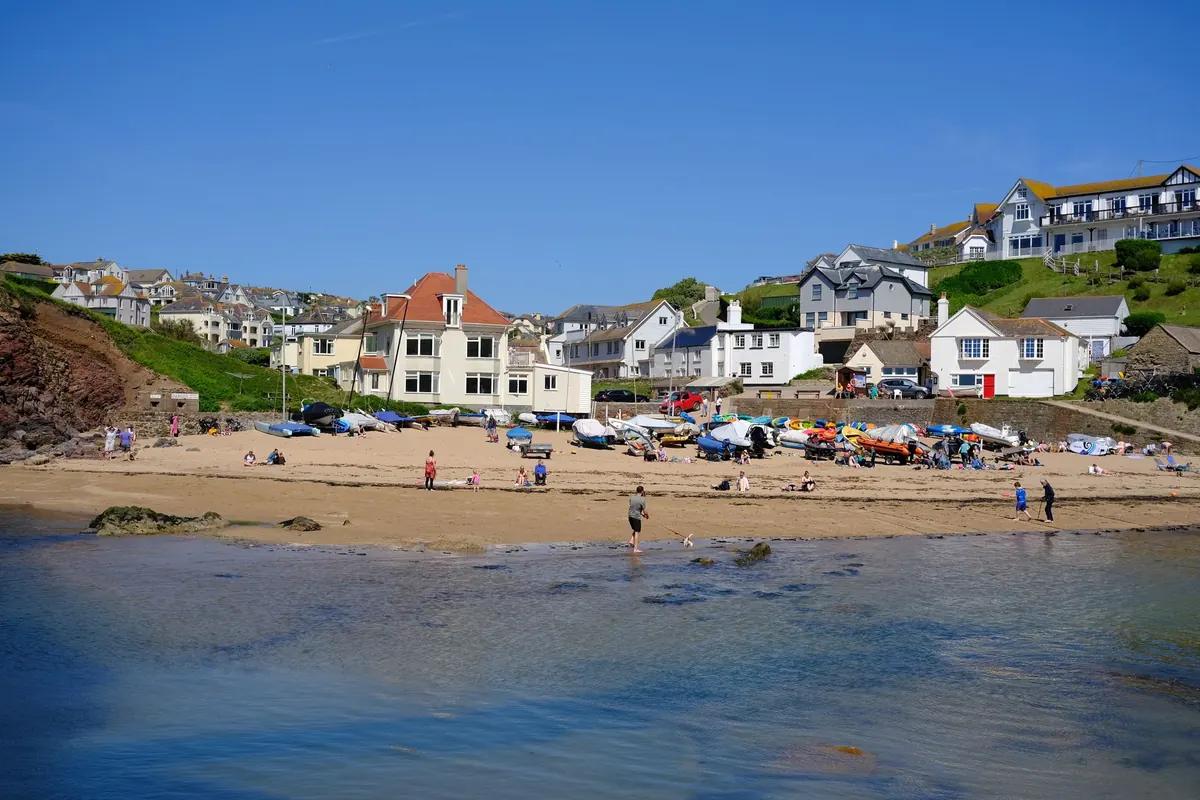
Ask two people who live ten miles apart in Devon where you should buy and you will get two confident, opposite answers. A cottage above a north-facing cove and a farmhouse on the Culm plateau are both "Devon", but they ask different things of you: different budgets, different insurance, different winters. The county is a patchwork of micro-markets, and choosing between coast and country is really a bundle of smaller decisions about how you want to spend an ordinary Tuesday in February.
Coastal and inland mean more than they sound
Coastal Devon takes in the busy resort towns of Torbay, the genteel south-coast towns of Sidmouth and Budleigh Salterton, the estuary towns of Dartmouth, Kingsbridge and Topsham, and the surf-led villages of the north coast around Croyde, Woolacombe and Braunton. Inland Devon runs from the Dartmoor fringe and the South Hams hinterland through Mid Devon's market towns to the folds of Exmoor.
The useful distinction is not distance from the sea, it is what the sea does to the local economy. A village two miles inland from Braunton or Kingsbridge behaves much more like a coastal village than a farmhouse outside Okehampton does. If you want sea air without sea-town noise, look at the in-between: towns on estuaries and tidal rivers, or villages up a lane from the beach where the summer traffic thins out.
What each side does to your budget
Sea views and harbour frontage command a premium that has little to do with square footage. It runs from modest to dramatic, street by street: a terrace one road back from the water in a sought-after town can cost far less than the row facing it, and the difference is often the view rather than the house.
Inland, your money stretches further. Mid Devon, the area around Okehampton and South Molton, and the villages behind the South Hams coast typically buy more house, more land and more parking than anything comparable with a sea glimpse. You are trading the view for a garden, a driveway and a bit more internal space — a trade plenty of buyers make once children, dogs or a workshop enter the picture.
Two practical checks before you fall for anything:
- Compare like with like. Search the same bedroom count and floor area on both sides of the county line and note what the difference buys.
- Ask whether the property is used as a holiday let locally. High concentrations affect parking, bin day, noise and how the street feels in winter.
Commutes and connectivity
Exeter is the hinge. The main line serves Exeter St David's, Tiverton Parkway, Newton Abbot, Totnes and Ivybridge, with the Riviera Line continuing to Torquay and Paignton. Fast services from Exeter to London Paddington typically run a little over two hours, which makes the Exeter travel-to-work area the realistic coastal-ish option for weekly commuting.
North Devon is different. Beyond Barnstaple the railway becomes the Tarka Line to Exeter, a lovely journey but not a fast one, and the A361 does the heavy lifting for drivers. If your job requires regular trips east, that drive will shape your week more than any view will.
Two things buyers routinely forget:
- Test the journey at the time you will actually do it. Summer Saturdays on the A38 and around Torbay are not the same road as a wet Tuesday in November.
- Check broadband and mobile signal at the property itself, not the postcode. Rural pockets still have slow connections, and if you work from home that matters more than a sea view.
Flood risk, on both sides
Coastal buyers worry about the sea; inland buyers often should worry about rivers. Tidal surge and wave overtopping affect low-lying seafront areas, and parts of both coasts have long-standing cliff instability and erosion concerns. Inland, the Exe, Culm, Taw, Torridge, Dart and Otter all have histories of flooding, and surface water can pool anywhere after heavy rain — including on hillsides.
Before you commit, check the Environment Agency's flood risk maps for river, sea and surface water, read the local authority's shoreline management or drainage plans where relevant, and ask the seller, in writing through your solicitor, about any flood history at the property. Then get buildings insurance quotes early. Coastal and flood-exposed properties can carry higher premiums or excesses, and you want to know that before you are emotionally committed.
Amenities and the season question
Coastal towns generally have good year-round services in the larger resorts, but smaller coves and villages empty out after half-term. Cafés shut, the second-home windows stay dark, and the nearest supermarket can be a twenty-minute drive. Inland market towns such as Tavistock, Crediton, Tiverton, Honiton and South Molton tend to keep a steadier rhythm: schools, surgeries, a library, a decent hardware shop.
Ask yourself how often you will want a big shop, a dentist and a secondary school within fifteen minutes. If the answer is "most weeks", a market town beats a cove with a seasonal car park problem.
What daily life actually feels like
Coastal living is salt, wind and maintenance. Render, metal fixings, timber and garden plants all take more punishment, and a west-facing garden may never grow a decent tomato. In return you get swimming before work, sailing clubs, coastal path walks and a social life that often revolves around the water.
Inland, you get frost pockets in valley bottoms, heavier rain on high ground, and longer seasons in sheltered spots like the South Hams. You also get space: room for a polytunnel, a workshop, chickens or a smallholding. If your weekends are about projects rather than paddleboards, the countryside usually wins.
A practical way to decide
- Write down a normal week: working days, school run, dog walks, how often you host visitors.
- Shortlist three areas and do the real commute or school drive at the real time.
- Visit midweek in February, in the rain. Then visit in August. Note which one you preferred.
- Check flood maps and get insurance quotes for any specific property.
- Test broadband and mobile at the address, and check parking on a summer evening.
- Talk to a local solicitor and an independent surveyor who knows the area's quirks.
Before you commit
Budget for the coast's extras: higher maintenance, possible insurance loading, and in some areas planning restrictions on short-term letting, which you should confirm with the local planning authority. Inland, budget for a car, a longer drive to services, and possibly a borehole or septic system if the property is genuinely rural.
Get a full survey rather than a valuation-only report, and take advice from a solicitor and mortgage broker before exchanging contracts. This is general guidance, not legal or financial advice, and Devon's micro-markets reward local knowledge. Whichever side you choose, buy the specific house and street, not the postcode — and make sure you have visited it in the least flattering month of the year.
Photo: Mick Latter / Pexels
Related posts
More stories you’ll love reading