




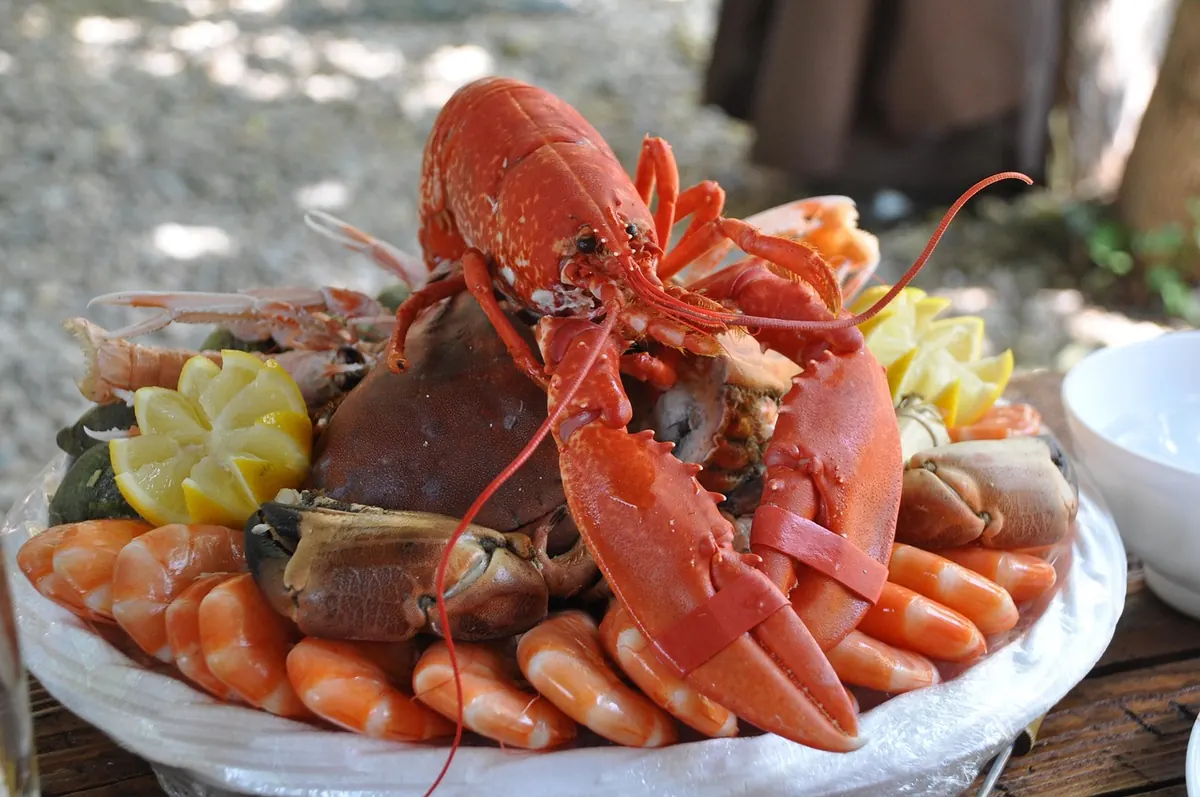
Ask a fishmonger in Brixham what is good in February and you will get a very different answer than you would in July. That is not fussiness; it is the calendar of the coast. Devon's fishing year runs on spawning cycles, water temperature and weather, and the small boats working out of Brixham, Dartmouth, Plymouth, Ilfracombe and Appledore move with it. Eating with the seasons here is not a marketing line. It is how the trade has always run. What follows is a month-by-month guide to what to look for, and how to choose it well.
How the Devon year splits in two
Two calendars run side by side. The first belongs to shellfish — crab, lobster, scallops, mussels, oysters — landed by potting boats and divers working the inshore reefs and estuaries. The second belongs to finfish, caught by line, net and trawl in the Channel and out towards the Eddystone.
For bivalves, the old rule about eating them only in months with an R still holds roughly true. Mussels and native oysters are at their best from September to April. Through the warm months they spawn, the flesh thins, and warmer water raises the risk of the algae that can make filter feeders unsafe. That is why some beds close in summer, and why you should pay attention to local fishery notices and buy from a supplier who can tell you where the shellfish came from. If you have an allergy or a health condition, take advice before experimenting.
Finfish flip the other way. Cold water brings flatfish, cod, whiting and hake. Warm water brings mackerel, bass, bream, squid and cuttlefish. The most useful habit you can develop is asking two questions at any counter: which boat landed it, and when.
Winter: December to February
This is flatfish weather. Plaice, Dover sole, lemon sole and brill are all in good condition, and a cold-water plaice is a genuinely fine thing — firm, sweet, best cooked whole on the bone with butter and parsley. Cod and whiting appear on the boards, and hake lands steadily through late winter. Herring and sprats arrive in shoals, cheap and superb grilled or soused.
Shellfish is at its peak. Hard-shell lobster, caught outside the summer moult, gives noticeably more meat per pound than the soft, newly-shelled lobsters of August. Brown crab is dense and full. Mussels from the estuaries and native oysters are in season, and hand-dived scallops are available year-round but land in good numbers.
Spring: March to May
A transition month by month. March still eats like winter, then the water begins to warm and the picture changes quickly. Spider crab moves inshore from late spring, one of the most underrated catches on this coast — sweet, inexpensive, and best picked and used in sandwiches or pasta. Cuttlefish and squid start to show, along with the first John Dory and turbot.
This is also when the bivalve season closes out. Get your last mussels and native oysters before the warm weather settles in. Farmed rock oysters are available all year and are a reasonable substitute when the natives are resting.
Bass deserves a mention here. Stocks have been under pressure for years and the rules around landing have changed more than once, so rather than assuming, ask what is currently allowed and where the fish came from. If it is not available, pollack is a fine stand-in.
Summer: June to August
The best months for variety. Mackerel arrives in numbers and is at its absolute best within hours of being caught — buy it from a boat or a counter with fast turnover, and cook it the same day. Bass, black bream, red mullet, gurnard, squid, cuttlefish, langoustines and spider crab all fill the slabs.
Pilchards and sardines come in from midsummer, and they are one of the great bargains of the Devon coast. Split them, grill them hard, eat them with nothing more than lemon, salt and bread.
What you will not find much of is the R-month shellfish. Native oysters are off, mussels are thin, and crab is moulting, which means softer shells and wetter meat. Consolation comes in the form of hand-dived scallops and a summer lobster you eat knowing it will be better in December.
Autumn: September to November
Arguably the finest eating of the year, because both calendars overlap. The water is still warm enough for mackerel and red mullet, while mussels, native oysters and hard-shell crab come back on stream. Turbot and brill land well, Dover sole is at its peak, and hake returns for the winter run.
October and November are the months to stock the freezer. Buy whole fish, ask the fishmonger to gut and scale it, and freeze it the day you buy it, labelled with the date and the species. A bag of frozen mackerel fillets in January is a small triumph.
Choosing well, whatever the month
Sustainability in a Devon fishmonger's is mostly about asking the right questions rather than memorising lists. Stocks, gear rules and quotas shift, and a good counter will respect you for checking.
- Where was it landed, and by which boat? A day boat that returns the same day generally lands better fish than one that has been out for a week.
- How was it caught? Pot, handline and dive methods are usually the lowest impact. Towed gear varies enormously depending on the ground.
- Is it certified? The blue MSC tick is a useful shorthand, though plenty of good small fisheries are not certified simply because of cost.
- Is there a better buy today? Gurnard, pollack, pouting, megrim, whiting and cuttlefish are all excellent, often cheaper, and frequently overlooked.
- Whole or filleted? Take the frame home for stock. It costs nothing and makes a base for fish soup or a risotto.
One caution: "landed in Devon" and "caught in Devon waters" are not the same thing. If local provenance matters to you, say so.
Getting the best from it at home
Buy from the quay where you can. The sheds at Brixham, the fish merchants around Plymouth and the harbour shops at Dartmouth, Ilfracombe and Appledore will sell you fish that has travelled yards, not lorries. Market stalls in Exeter and Barnstaple are worth a look too.
Keep it simple. Mackerel and gurnard want high heat and short cooking. Sole and plaice want butter and patience. Crab wants nothing but good bread and lemon. Buy a little less than you think you need, cook it the day you buy it, and let the season — not the recipe — make the decision.
Photo: NadineDoerle / Pixabay
Related posts
More stories you’ll love reading